




Beyond Baby Notes
FreeArrives on the 15th of every month
One topic each month, often tied to that month's health observance: how common it is, one myth retired, what you can do now, when it's worth an evaluation, and a pick from the blog.

Redefining Postpartum Care
Physician-led care for the leaking, pain, pressure, and changes that are common after birth, but rarely addressed.
Why Beyond Baby MD
Founded and led by a board-certified urogynecologist, not a wellness brand.
Structured care for the full first year, not a single six-week visit.
Learn and assess from home; get examined and treated in person.
Real science first, with honest answers about what we know.
The most advanced therapies alongside proven, traditional options.
Our mission
The most underserved chapter of a woman's life deserves more than a pamphlet and a checklist.
The problem we solve
For most women, postpartum care is one visit at six weeks — a check for healing and birth control, and then you're on your own.
But leaking when you cough, pain with sex, a heaviness that won't go away, trouble controlling your bladder or bowels — these often begin after that visit, and they're frequently brushed off as "just part of having a baby."
They aren't. They're recognized medical conditions with names and with treatments, and you deserve to have them looked at in a comprehensive and compassionate manner.
How it works
Understand what you're feeling, in plain language, from medical resources you can trust.
Answer a few questions and see where you stand. Full Online Assessment coming soon.
A thorough, unhurried postpartum pelvic floor evaluation at 8–12 weeks, timed to when care works best.
A clear plan, from conservative first steps to advanced options — your priorities lead — with close follow-up to see whether it is working and adjust it if it isn't.
We coordinate with your OB, primary care provider, and local physical therapists — saving you time and hassle.
What we treat
The Beyond Baby Pelvic Health Assessment
A proprietary questionnaire — a structured set of questions about your delivery, your symptoms, and your recovery — organized into a report you bring to your evaluation, and one your clinician reads before you arrive.
This is a screening and education tool. It does not diagnose, and it does not recommend treatment. Every woman is evaluated by a clinician.
Ready to book your evaluation? See preparing for your first visit.

Founded by Neeraj Kohli, MD, MBA — board-certified urogynecologist and former Chief of Urogynecology at Brigham and Women's Hospital, a Harvard teaching hospital.
Author of the forthcoming book Beyond Baby, a physician's guide to the first year after birth.
Meet Dr. Kohli →
The book
Dr. Kohli's book, Beyond Baby, covers the whole first year: leaking, prolapse, painful sex, sleep, mood, your body, and the treatment options your doctor may not mention. Plain language, real evidence, no shame.
Join the book waitlistFree guide
Tell us a little about where you are, and we'll send guidance matched to your stage — plus access to our education library.
Please don't include medical details here. See our Privacy Policy and Consumer Health Data Policy.
The best time to evaluate the pelvic floor is in the first months after birth.
Coming SoonHome / Treatments / EmFemme 360
03Advanced therapies
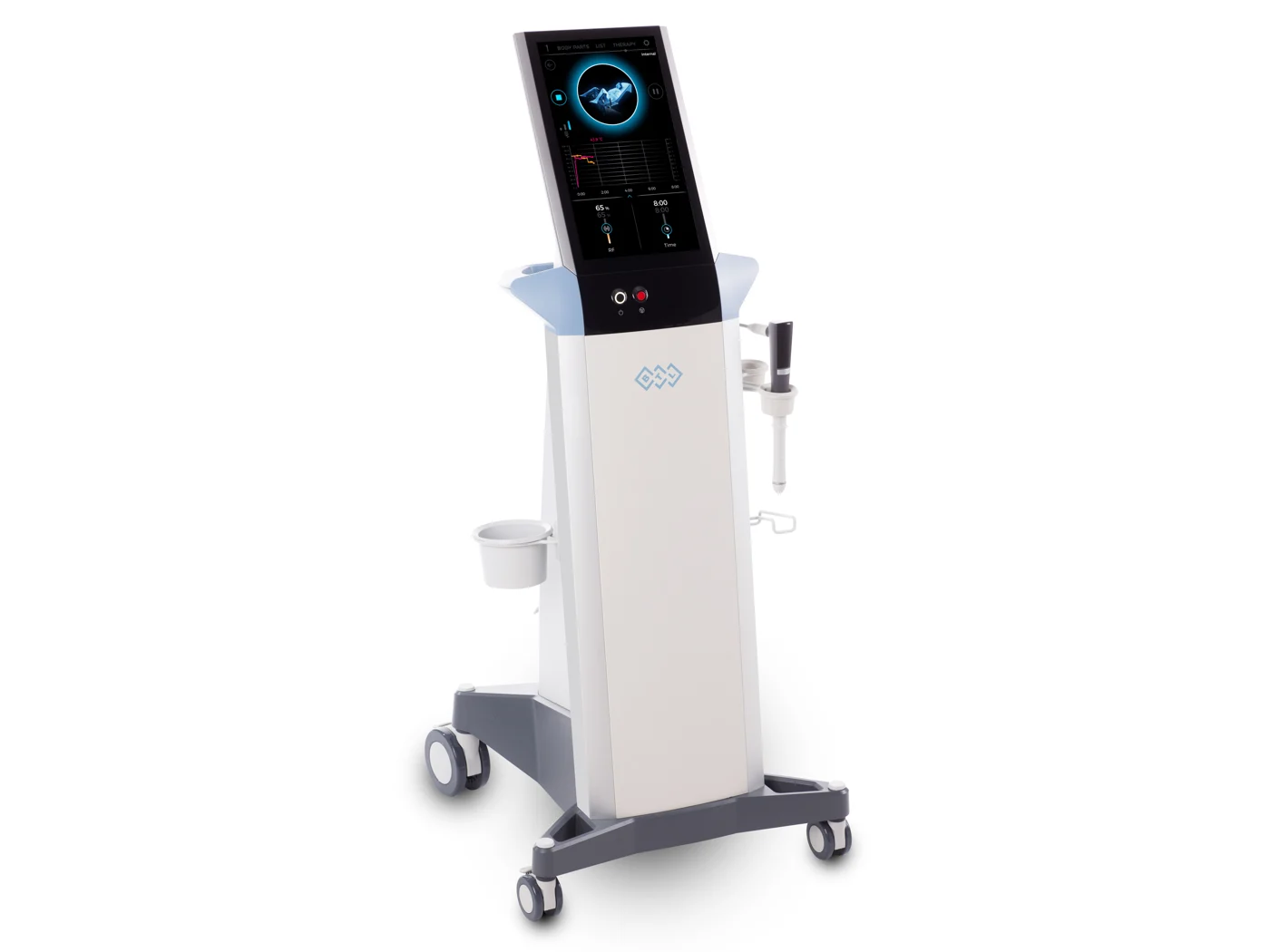
If sex feels different since your baby, or dryness or a feeling of looseness has you feeling less like yourself, you're far from alone, and it's worth raising. EmFemme 360 uses controlled radiofrequency warmth to treat the tissue of the vagina and vulva, with no incision, no anesthesia, and no recovery time.

Image courtesy of BTL Industries.
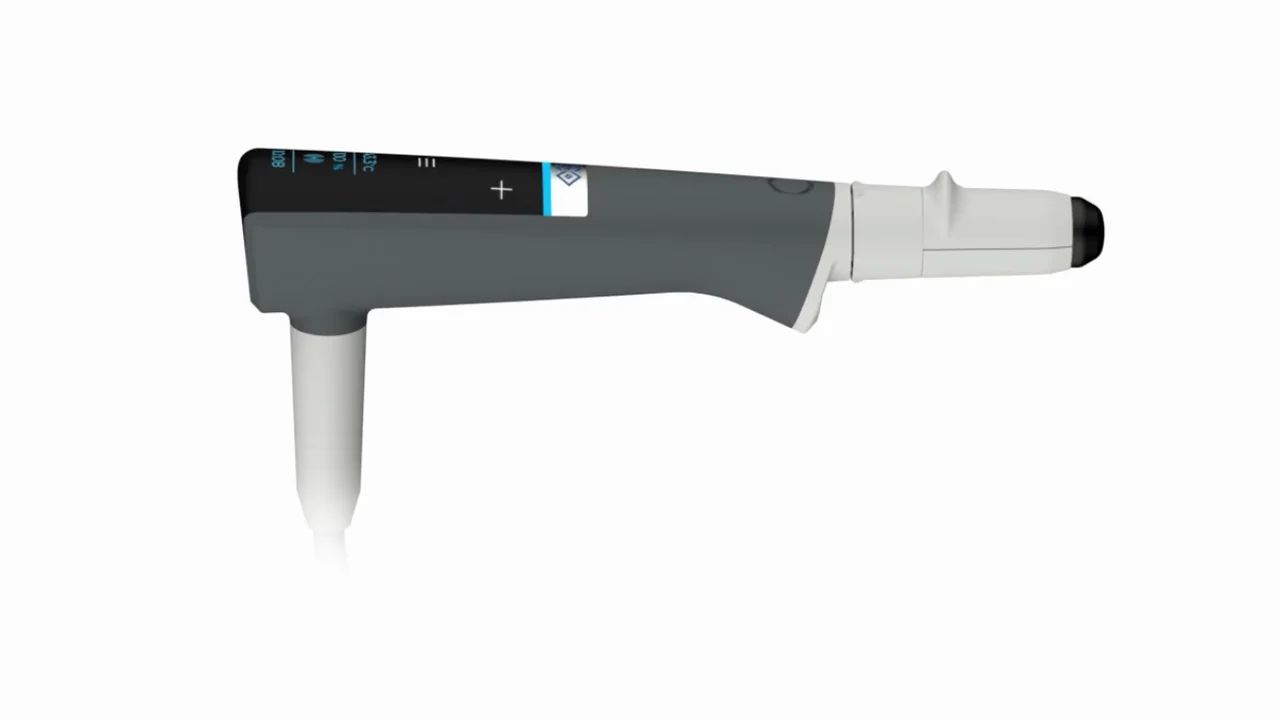
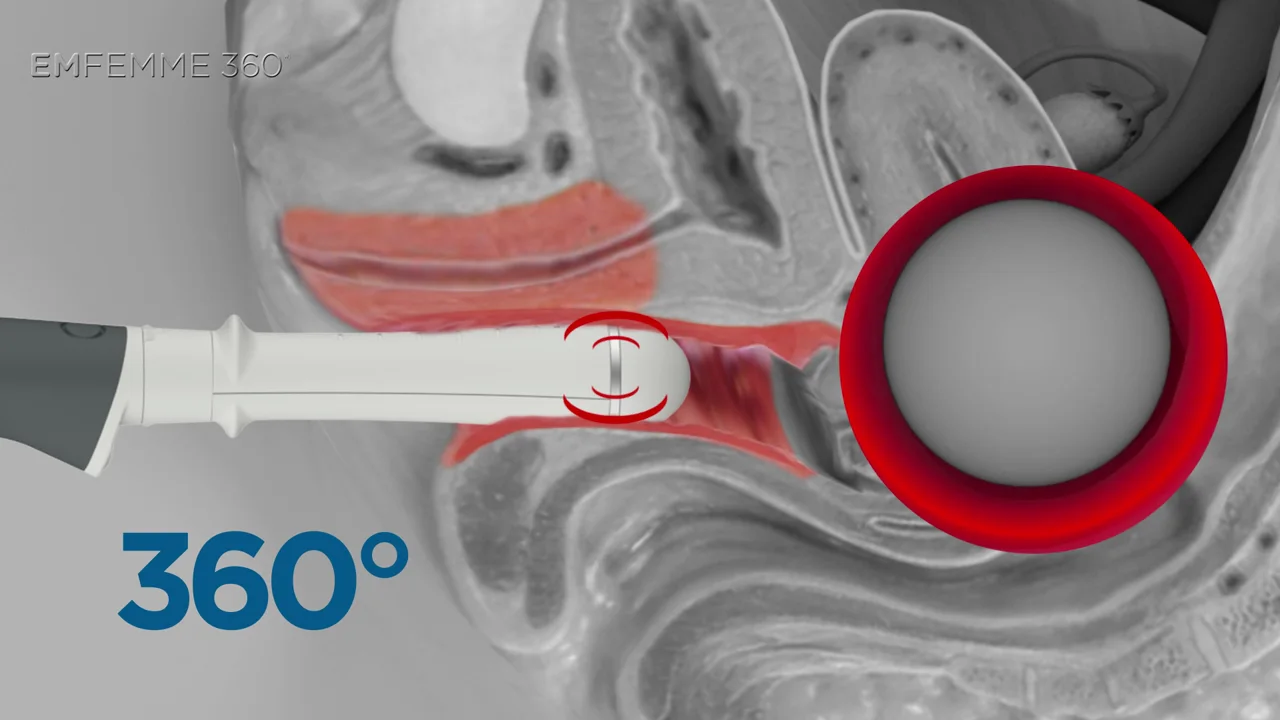
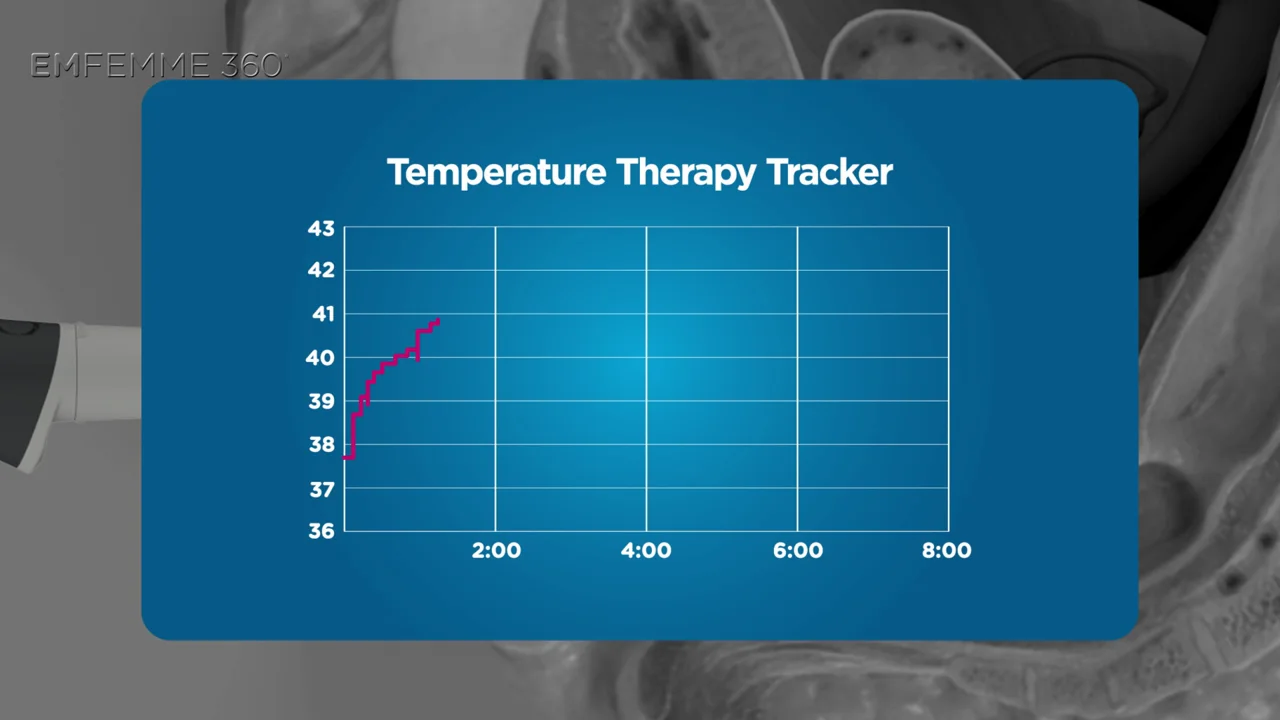
EmFemme 360 is a radiofrequency device that gently heats the tissue of the vagina and vulva. A smooth internal handpiece treats the full 360° of the vaginal wall at once, and a second handpiece treats the external tissue. The temperature is monitored throughout, so the warmth stays in a controlled range.
It is FDA-cleared as a radiofrequency heating device, for uses such as increasing local circulation. The FDA has not cleared any energy-based device specifically for vaginal looseness, dryness, or sexual function, and has cautioned that these uses aren't established. We offer EmFemme 360 for these symptoms based on clinical experience and emerging evidence, and we'll talk that through with you.
Pregnancy, delivery, and breastfeeding can stretch and thin the tissue of the vagina and vulva. Many women notice dryness, tenderness with sex, or a feeling that things are looser or less sensitive than before.
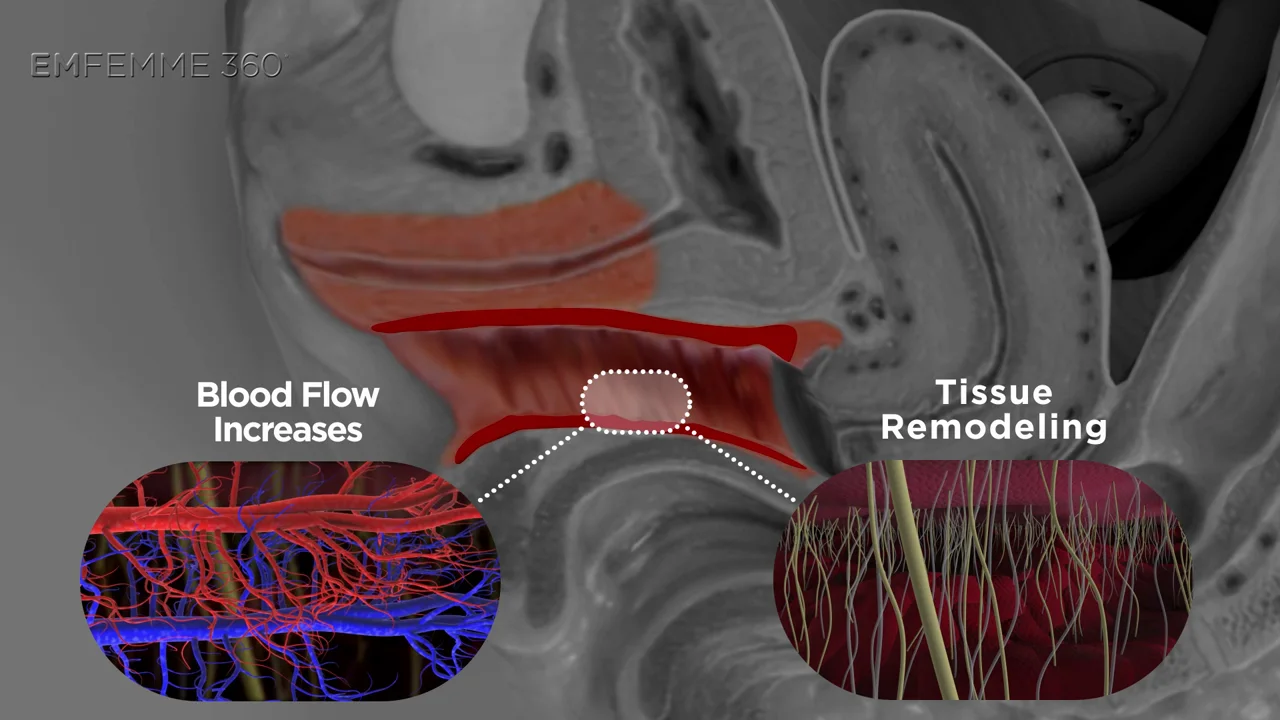
Controlled warmth increases blood flow in the tissue and, over time, is thought to stimulate the body's own collagen and elastin, the proteins that give tissue its firmness, elasticity, and natural moisture. The aim is healthier, more comfortable tissue, renewed by your own body.
EmFemme 360 works on the tissue, not the muscles. That's why it's often paired with pelvic floor therapy or EMSella.
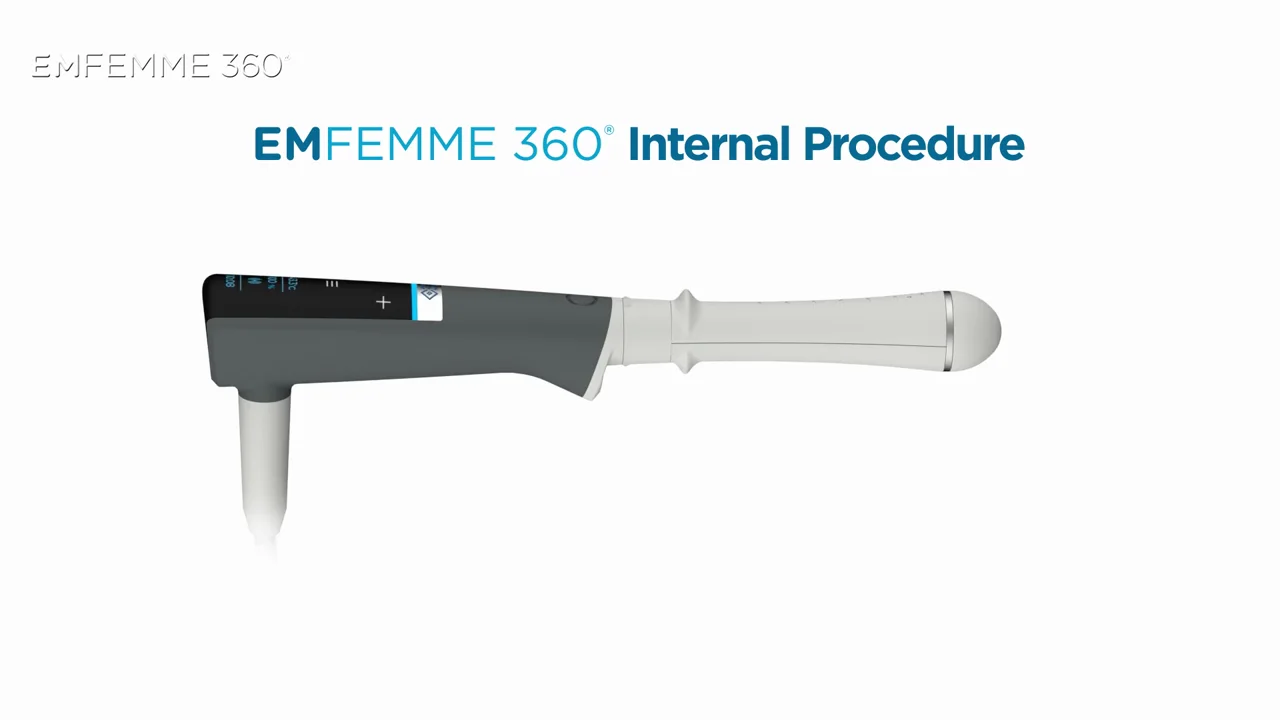
Stills from BTL Industries' mechanism animation.
EmFemme 360 treats one thing: the tissue of the vagina and vulva, not the muscles. Renewing that tissue may help with dryness and tenderness, a feeling of looseness or reduced sensation after birth, and, alongside pelvic floor therapy, mild bladder leakage or pressure. It isn't the answer for pain driven by tight muscles or irritated nerves, or for bowel leakage. A proper pelvic floor evaluation tells us whether the tissue, the muscles, or both need attention.
Tissue changesWhat EmFemme 360 treats
Muscle or nerve painNot an EmFemme option
After a baby
We don't start EmFemme 360 before about three months after delivery, and only once your evaluation shows any tear or episiotomy has fully healed.
Low estrogen while breastfeeding can thin and dry the tissue. EmFemme 360 is one option; lubricants and vaginal estrogen are others, and they're often combined. It hasn't been specifically studied in nursing mothers, so we'll talk it through.
EmFemme 360 isn't used during pregnancy. If you might be pregnant, or plan to try again soon, tell us first and we'll time it around that.
Let us know about any metal or electronic implants, including a copper IUD or a pacemaker. We check for these before you start.
Treatment waits until any vaginal or urinary infection has cleared and postpartum bleeding has stopped.
Before
During
After
That's why we recommend EmFemme 360 alongside pelvic floor therapy, not necessarily instead of it, and why we tell you plainly what the research shows and what it doesn't yet.
References
Patient stories filmed by BTL Industries, the maker of EmFemme 360. These women were not treated at Beyond Baby MD, and individual results vary.
There's no single right answer for everyone — the best treatment for you can only be chosen once we understand your situation. That starts with a conversation with your doctor, a careful review of your symptoms and history, and a comprehensive pelvic floor examination and evaluation. From there, we build the plan around you.
EmFemme 360 is an advanced therapy. For most women it comes after, or alongside, the first two steps, not before them.
Lubricants and moisturizers, pelvic floor exercises done correctly, and pacing your return to sex.
Supervised pelvic floor physical therapy and physician-run FemiScan EMG-guided therapy, vaginal estrogen, tibial nerve stimulation, a pessary, and urethral bulking.
Device-based options used alongside therapy: EMSella, EmFemme 360 vaginal radiofrequency, MonaLisa Touch vaginal laser, JETT Plasma, the O-Shot (PRP), and SoLá for pelvic pain.
EmFemme 360 is hereFor general education only; not a substitute for individualized medical care.
EMFEMME 360® is a registered trademark of BTL Industries. Images, animation, and patient videos courtesy of BTL Industries.
Also offered here
Home / Newsletter
The Beyond Baby MD newsletter
Once a month: what's normal after birth, what isn't, and what actually helps. Written for you by a board-certified urogynecologist and our pelvic floor team, in plain language.

Free, once a month
Leaking, pain, pressure, and changes after birth are too often brushed off as "just part of having a baby." We started this newsletter because you deserve better information than a pamphlet and a checklist, and the confidence to ask for the care you need.
One email a month. No spam, and you can unsubscribe any time. Beyond Baby MD Plus members will get two issues a month, matched to their postpartum month. See sample issues
Please don't include medical details here. This is general education, not medical advice. See our Privacy Policy and Consumer Health Data Policy.
Common after birth. Rarely talked about.
ACOG Postpartum Toolkit — Postpartum Complications. Ekdahl AS, et al. BMC Pregnancy Childbirth 2026. Lin S, et al. Sci Rep 2024.
What's inside
No generic wellness tips. Every issue is written or reviewed by our clinical team.
What's typical at six weeks, three months, and a year, and the signs that mean it's time for an evaluation.
Leaking, prolapse, pelvic pain, painful sex, and abdominal separation, explained so you understand what's happening.
What's new, what the evidence says, and what it means for you, from the clinicians who use these treatments.
Real questions from women like you, answered plainly by our team.
Questions to ask your OB or midwife, and how to describe symptoms so they're taken seriously.
First access to new guides, the online Pelvic Health Assessment, and news from our Boston clinic.
Sample issues
Two newsletters, both from our clinical team. Everyone who signs up gets Beyond Baby Notes. Beyond Baby MD Plus members also get Beyond Baby Notes Plus, written for the month they're in.
Arrives on the 15th of every month
One topic each month, often tied to that month's health observance: how common it is, one myth retired, what you can do now, when it's worth an evaluation, and a pick from the blog.
Arrives on the 1st of every month
Written for your postpartum month: what's expected right now, something to try, when to call, and a recipe for the month, with notes for nursing and for how you eat.
Sample issues. The reader's name and the dates are examples.
For general education only; not a substitute for individualized medical care.
Home / The book
Coming soon on Amazon · January 15, 2027
Dr. Neeraj Kohli's guide to the first year after birth: what's normal, what isn't, and what actually helps. Written for you in plain language by a Harvard-trained, board-certified urogynecologist and pelvic floor specialist.
Join the waitlist
Six weeks is when most care stops. It's also when many of the questions start. Beyond Baby walks you through the whole first year, chapter by chapter, with the evidence behind every recommendation and the questions to bring to your doctor.
We'll email you when the book is available. No spam, and you can unsubscribe any time.
Please don't include medical details here. See our Privacy Policy and Consumer Health Data Policy.
Praise for Beyond Baby
“After nearly four decades caring for women, I know how much attention goes into preparing for childbirth—and how little goes into preparing women for what follows. In Beyond Baby, Dr. Neeraj Kohli brings exceptional expertise, compassion, and refreshing candor to this neglected part of women’s health. He addresses the questions women are often reluctant to ask—and too often aren’t invited to—with clear explanations, practical guidance, and an unwavering respect for their concerns. Insightful, reassuring, and empowering, this is a book I wish every one of my patients could take home after delivery. An invaluable resource and a powerful reminder that caring for a mother matters every bit as much as delivering her baby.”
Inside the book
For general education only; not a substitute for individualized medical care.
Home / Policies & disclosures
Last updated November 2026
How we handle medical information, images, patient stories, our relationships with manufacturers, and your privacy.
Everything on this website, including our blog, newsletter, guides and pelvic health assessment, is general education. It is not medical advice, a diagnosis or a treatment recommendation, and it does not create a doctor–patient relationship. Our assessment is a screening and education tool; it is not a validated diagnostic test and does not recommend treatment. Please talk with your own clinician about your symptoms and options.
In an emergency, call 911. If you have thoughts of harming yourself or your baby, call or text 988.
Every article is written or reviewed by a board-certified physician and cites its sources. Before a scheduled article is published, we check it again against the current research and guidelines, update it if anything has changed, and a physician signs off before it goes live. Published articles are re-reviewed every three months, and the “Last reviewed” date on each article shows when that last happened. If something looks out of date, please tell us.
This website uses photographs supplied or licensed by medical device and product manufacturers, and images created with artificial intelligence (AI) tools. All images are illustrative. Unless a caption says otherwise, the people shown are not Beyond Baby MD patients, and images do not show actual treatment results. Diagrams drawn by Beyond Baby MD are simplified and not to scale.
Some of our videos are made with artificial intelligence (AI) tools. They may feature AI-generated presenters, who are not real people, and an AI-generated likeness and voice of Dr. Kohli, created from his own recordings with his permission. Every script is written or reviewed by Dr. Kohli before it is published. Like everything on this site, these videos are general education, not individual medical advice.
Some pages include stories filmed or supplied by device manufacturers. These women are not our patients, and each story is labeled with its source. Stories from our own patients are shared only with their written consent. Each story is one person's experience. Individual results vary, and no outcome is guaranteed.
When a page uses information, images or video supplied by a manufacturer, we say so on that page. Product names are trademarks of their owners, and their use does not imply that a manufacturer endorses Beyond Baby MD. Our evidence summaries come from peer-reviewed research and link to their sources; we do not repeat manufacturers' outcome claims.
Beyond Baby MD offers some of the treatments described on this site, including self-pay treatments that insurance does not cover. Dr. Kohli has studied and published on FemiScan and SoLá Pelvic Therapy, and is a licensed O-Shot® provider. He is also Chief Medical Officer of Emmy Medical, which makes the CystoSure catheter he co-invented; CystoSure is not a Beyond Baby MD treatment. Our practice also sells Nutrafol Postpartum, a hair supplement discussed on this site, and benefits financially from those sales; it is also available directly from the manufacturer and from other retailers. We never accept payment for patient referrals.
Our website forms ask only for your name, email, ZIP code and where you are in pregnancy or the first year after birth. Please do not send medical details through the website. We use your information only to send what you asked for, we never sell it, and you can unsubscribe at any time. Once you become a patient, your health information is protected under HIPAA and described in the Boston Urogyn Notice of Privacy Practices. The full details are in our Privacy Policy, Cookie Policy, Terms of Use and Consumer Health Data Privacy Policy. Questions: privacy@beyondbabymd.com.
We link to research and manufacturer sites for your reference. We are not responsible for their content or privacy practices.
Home / Insurance
Insurance & coverage
Your pelvic floor evaluation, testing, and traditional treatments are usually billed to your health plan. Here's how coverage works, which plans we take, and what to expect before your first visit.

Pelvic floor problems after birth are medical conditions, so most of the care for them is billed to insurance, just like any other specialist visit. That usually includes:
"Covered" still depends on your plan. You may have a deductible, a copay, or coinsurance, and some treatments need approval from your plan first (prior authorization) or have a limit on the number of visits. We check this before you start, so you're not surprised.
Plans change, and so do networks. Before your first visit, please call us to confirm we take your specific plan, and check with your insurance company too. The member services number is on the back of your card.
Sometimes Beyond Baby MD isn't in-network with a particular plan. When that happens, we'll help you apply for out-of-network coverage by sending your plan the information it needs, such as why you need a pelvic floor specialist.
If your plan approves it, it may pay for all or part of your care, though out-of-network benefits often come with a separate deductible or a higher share of the cost. If your plan says no, we'll talk with you about your options before you're seen, including paying for the visit yourself.
If we refer you to a pelvic floor physical therapist, your therapy is billed by that therapist's practice, so coverage depends on the therapist and on your plan. Many pelvic floor therapists take insurance. Others are self-pay only, and some can give you a receipt to submit to your plan for out-of-network reimbursement.
Before you book, ask the therapist's office whether they take your plan, whether you need a referral or prescription, and how many visits your plan allows. We can refer you to a therapist who takes your insurance or to a self-pay therapist, whichever you prefer.
Insurance questions
Coverage information on this page is general. Your plan's benefits decide what's covered. Questions? Call our office before your visit.
Book your evaluation, and our team will check your benefits before you come in.
Coming SoonHome / Contact
Contact us
Beyond Baby MD is a program of Boston Urogyn. Our team can answer questions about your symptoms, insurance, and what to expect at your first visit.
That's 781-725-MAMA
Beyond Baby MD at Boston Urogyn
70 Walnut Street, Suite 101
Wellesley, MA 02481
See preparing for your first visit: how to book, what to bring and what to expect.
Send a message to the practice, review your visits, and see test results in the patient portal.
If you think you have a medical emergency, call 911 or go to the nearest emergency room.
Home / Insurance / Advanced treatments
Advanced options using newer technologies
Most advanced options using newer technologies aren't covered by insurance. You'll know the full price before you decide, and there are ways to make it easier, including your HSA or FSA in some cases and healthcare financing through CareCredit.

These are the advanced options using newer technologies we offer. Each one has its own page explaining how it works and what the research shows.
Self-pay surgical procedures
We'll only suggest one of these after your evaluation, and alongside the traditional, insurance-covered options, not instead of them. Many women never need one. Wondering why insurance doesn't pay? Read "Insurance won't cover it. Is it a scam?"
Some advanced treatments may be eligible for payment from a health savings account (HSA) or flexible spending account (FSA) when they treat a medical condition, such as urinary leakage. Treatments done mainly to improve appearance aren't eligible under IRS rules (IRS Publication 502).
Please check with your HSA or FSA administrator before your treatment. They decide what's eligible, not us, and the rules vary by plan. Many administrators ask for a letter of medical necessity from your doctor. If yours does, let us know.
CareCredit is a health care credit card you can use to pay for treatment over time. You can apply online or ask us about it at your visit.
You have the right to receive a "Good Faith Estimate" explaining how much your health care will cost.
Under federal law (the No Surprises Act), health care providers must give patients who don't have insurance, or who aren't using their insurance, an estimate of the expected charges for non-emergency items and services.
For questions or more information, visit www.cms.gov/nosurprises/consumers or call 1-800-985-3059.
Self-pay questions
HSA, FSA, and financing information is general and not tax or financial advice. Check with your plan administrator or a tax professional about your own situation.
Your evaluation is usually covered by insurance, and it's where we'll talk through every option, covered and self-pay.
Coming Soon